|
PINBALL MACHINES
overview history features
Overview
Pinball machines are a long standing favourite for games room, and these exciting games have retained their collectability and value over the years!
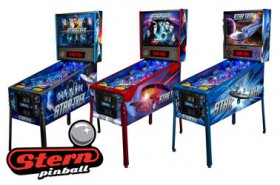
Currently there is only one manufacturer of Pinball machines in the world, Stern, and as such the various pinball models have become quite rare and sought after. Particularly popular are those pin tables based on movies or television series.
.jpg)
Batman: The Dark Knight Pinball (Stern, 2008)
Liberty Games is able to offer a wide range of reconditioned Pinball tables. These tables have seen use in commercial sites and are subject to a full clean, service and testing by our experienced technicians. We do all we can to ensure these tables are delivered looking as close to new as possible!
There is also an ever changing selection of brand new pinballs currently being manufactured by Stern.
History
The origin of the modern Pinball table dates back several hundred years to the evolution of traditional ball games such as Croquet and Shuffleboard from being outdoor lawn games into indoor table versions. These "table top" incarnations became the ancestor to the pinball machine.
The pinball story starts proper in 18th Century France and the "Bagatelle" table game designed in honour of King Louis XIV. This game was essentially a slender billiard table with an inclined playfield that players would shoot an ivory ball around using cue sticks. The "Bagatelle" table became a favourite in France and eventually spread to other countries such as the United States.

The Bagatelle Table Game
The pinball machine itself came into existance in 1871 when the British born and American-based inventor Montague Redgrave patented his improved Bagatelle table that featured coiled spring and plunger at the end of the table instead of using a cue. The plunger remains one of the most defining characteristics of the Pinball machine to this day.

Montague Redgrave's Improvement In Bagatelle
In common with most mechanical games the evolution from Bagatelle to Pinball is closely aligned to their use for gambling. The introduction of grids and scoring areas with targets and holes on the playfield led to the idea of winning "free games" or "extra goes", which would later be refined to playing for extra balls.
In the Depression era 1930s, several manufacturers began to establish themselves in the USA. David Gottlieb's Baffle Ball became a huge hit as an affordable entertainment in commercial sites and Gottlieb became the first major pinball manufacturer. Others soon followed, the Ballyhoo game arrived as competition to the Baffle Ball and its success saw the founding of the Bally company and the designer of the innovative Contact pinball, Harry Williams, also founded Williams Manufacturing.
Gottlieb

Baffle Ball (1931) Barb Wire (1996)
Bally
.jpg)
Ballyhoo (1932) Playboy (1978)
Williams

Hot Tip (1976) The Addams Family (1992)
Gottlieb dominated the immediate post war market and their machine Humpty Dumpty, from 1947, was the first to feature player controlled flippers to help keep the ball in play longer. Over the next 20 years other features such as "Drop Targets" and "Multi Ball" became regular features of Pinball machine designs. By the 1970s the advent of the micro processor meant Pinball designers could add sound effects, speech and digital displays to games and the Pinball machine enjoyed its most successful period.
During the 1980s the advent of the video game all but killed off the pinball machine. By the end of the 1990s industry giants like Gottlieb and Capcom had ceased manufacturing, while Data East survived until the end of the millenium under the Sega banner. Sega subsequently sold their pinball division to their Pinball president Gary Stern, and he established Stern Pinball - currently the only manufacturer of new pinballs.
Pinball has recently undergone a huge revival thanks to the emergence of the home games room. While its presence in arcades may have diminished its place in popular culture is as strong as ever, with many people still automatically picturing pinball machines as a mainstay of bars and a symbol of rebellious youth. With manufacturing of new titles limited to just one company worldwide many Pinball titles have now become extemely collectable and their values have soared.
Features
Playfield
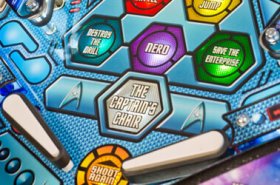
The playfield is surface inclined at roughly 6 degrees away from the player that features multiple targets and scoring areas. The ball is put into play on the playfield by using the plunger - the ball will then move unpredicatably down the playfield as it comes into contact with objects before being returned by using the flippers.
Plunger
The plunger is a spring loaded rod with a small handle that is used to propel the ball into the playfield.
Flippers
The flippers are small levers used to redirect the ball back into the playfield. These are the main controllers the player has over the ball. By carefully timing and controlling the use of the flippers players can direct the ball towards scoring targets.
Backglass
The backglass is a verticle graphic panel mounted on the front of the backbox, usually containing the name of the machine and some eye-catching graphics - as well as the dot-matrix display that shows scores and animations. These backglass graphics are often used to tie the pinball machine into a particular movie or television series as a them for the game.
Scoring
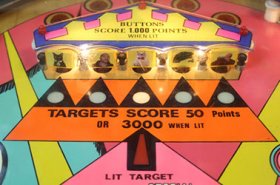
Pinball scoring can be quite particular to individual games and has changed over the years as well. The player scores points when the ball comes into contact with scoring elements such as targets and ramps. Early machines used lights to show scores, often representing points in hundreds of thousands. Modern pinballs tend to show scores on dot matrix displays and often tally points in millions, billions and memorably on Ballys Dr Dude, gazillions!
Features
Successful pinball machines tend to be those that have the best, and most varied, features available. Common features in pinball machines include:
Ball lock - locking two or three balls into a specific hole or target that starts multiball.
Multiball - more than one ball in play at the same time, often including Jackpot scoring.
Jackpot - targets on the playfield that vastly increase the scoring values of other playfield features.
Extra ball - when the player earns the extra ball this counts as an additional "life" |